
Bridge loans move fast, and the rate structure behind them can have a major impact on the total cost of the deal. Borrowers who focus only on the starting rate sometimes end up paying far more interest than they originally planned, especially if timelines extend or market rates change.
The choice between a SOFR-plus floating rate and a fixed rate affects monthly payments, refinance flexibility, and overall deal certainty.
This guide explains how both structures work, what they cost in practice, and how to decide which one fits your deal best.
What Is a Bridge Loan Rate Structure
A bridge loan rate structure determines how interest is calculated and whether the rate can change during the loan term. Most bridge loans use either a floating rate tied to SOFR or a fixed rate locked at origination.
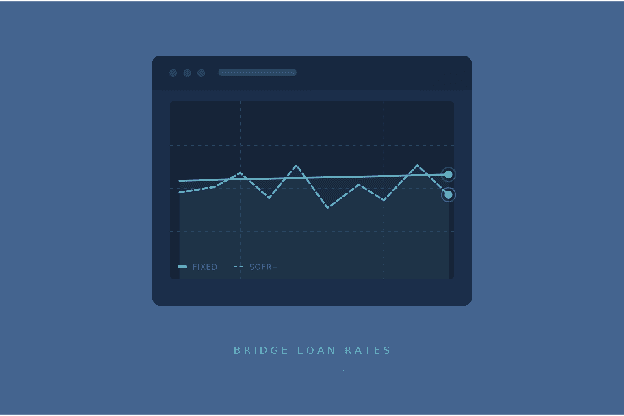
The structure affects monthly carrying costs, refinance planning, and how easily investors and lenders can model the deal. Floating rates usually start lower but can rise over time. Fixed rates provide certainty but generally come at a higher initial cost.
SOFR Plus Floating Rates: How They Work
SOFR stands for Secured Overnight Financing Rate. It replaced LIBOR as the benchmark interest rate in 2023. Unlike LIBOR, which relied on bank estimates, SOFR is anchored to actual overnight Treasury repo transactions. It is observed, not estimated, which makes it more transparent and harder to manipulate.
A SOFR-plus bridge loan works like this: your all-in rate equals SOFR plus a fixed spread. If SOFR is 5.25% and the lender charges a 3.75% spread, your rate is 9.0%. When SOFR moves, your rate moves with it.
The case for SOFR-plus is straightforward. The starting rate is typically lower than a fixed-rate alternative. SOFR is published daily by the Federal Reserve, so the index is fully transparent. If the Federal Reserve cuts rates during your hold period, your carrying cost drops automatically.
The risk is equally straightforward. If SOFR rises during your hold period, your interest cost rises with it. A 100 basis point increase in SOFR adds 1% to your annual interest cost. On a $2 million loan, that is $20,000 per year in additional carrying costs that did not appear in your original underwriting. If your timeline extends or your exit depends on specific refinance rates, that exposure compounds.
Floating-rate debt also creates friction with capital partners. Permanent lenders and equity co-investors prefer to model costs with certainty. A floating-rate bridge introduces a variable they cannot control, which can complicate refinance underwriting and equity returns.
Fixed Rate Bridge Loans: How They Work
A fixed-rate bridge loan locks the all-in rate for the entire loan term. If the loan closes at 9.5% fixed, it stays at 9.5% whether SOFR moves to 3% or 7%. The lender absorbs the rate risk. The borrower pays for that certainty through a higher starting rate.
The premium for a fixed rate is typically 50 to 150 basis points above the initial SOFR-plus rate. On a short hold, that premium is material. On a deal with an uncertain timeline or a volatile rate environment, it is often worth paying.
Fixed rates offer four practical advantages. First, budget certainty; you know your interest expense from day one. Second, refinance clarity; permanent lenders can underwrite your exit without modeling rate scenarios. Third, equity confidence; capital partners can project returns without a floating variable in the cost stack. Fourth, operational simplicity; no monthly rate adjustments to track or hedge.
The trade-off is that you do not benefit if rates fall. If SOFR drops 150 basis points during your hold, a SOFR-plus borrower captures those savings. A fixed-rate borrower does not. The fixed rate is insurance against rate increases, not a bet on rate direction.
Which Lenders Offer Which Bridge Loan Structure
Not every bridge lender can offer both structures. Understanding why helps; you evaluate what a lender is actually telling you about their capital model.
Specialty finance funds typically prefer SOFR-plus structures because their own funding costs are often tied to floating benchmarks. Many operate with longer-duration liabilities, including secured borrowing facilities and debt issuances, which they hedge using floating-rate lending. They pass the SOFR index through to borrowers while retaining the spread as their margin, making them aggressive SOFR-plus lenders. Fixed-rate lending can create a duration mismatch they may not be willing to absorb.
REITs and public credit platforms may offer both. Public companies manage earnings volatility carefully, which pushes some toward fixed-rate portfolios and others toward floating, depending on their liability structure and hedging strategy.
Private credit funds and direct balance sheet lenders are increasingly willing to offer fixed rates. A lender deploying its own capital with no duration liability can absorb rate risk cleanly. Fixed-rate loans produce predictable cash flow, simplify portfolio valuation, and reduce operational complexity. For a balance sheet lender, offering fixed rates is a genuine competitive advantage, not a structural concession.
Nonbank lenders and specialty firms often sit somewhere between institutional platforms and direct balance sheet lenders. Many lack the scale of public credit vehicles but compensate with flexibility in structure and underwriting. If a lender has a low cost of capital and appetite for rate risk, fixed rates become attractive. If they need to match fund durations closely, SOFR-plus structures usually prevail.
How to Evaluate Which Rate Structure Fits Your Deal
The right structure depends on five variables specific to your deal.
Timeline certainty is the first. If you have high conviction that your bridge term stays within 12 months and your exit is clearly defined, SOFR-plus may be acceptable. If the value-add is unproven, permitting is uncertain, or refinance markets could shift, fixed rates are worth the premium.
Cash flow sensitivity is the second. Model two scenarios before committing: SOFR rises 100 basis points, and SOFR rises 200 basis points. Calculate total interest paid under both structures across your expected hold. If the difference is material to your equity returns, the fixed rate premium is doing real work.
Stakeholder alignment is the third. Survey your permanent lender’s requirements before you choose a rate structure. Some permanent lenders are sensitive to floating-rate bridge debt and will price refinance terms accordingly. A fixed-rate bridge that costs 75 basis points more may unlock better permanent financing terms that more than offset the premium.
Rate differential is the fourth. Do not compare headline rates in isolation. Calculate the effective all-in cost over your full expected hold period under both structures and across rate scenarios. A SOFR-plus loan at 8.5% looks cheaper than a 9.5% fixed rate at origination. If SOFR rises 100 basis points and you hold for 18 months, the math reverses.
Negotiation is the fifth variable. Do not assume lenders will not offer fixed rates. Many will, especially when they have confidence in the deal, sponsorship, and exit strategy. The strongest fixed-rate pricing typically comes from early engagement, transparent underwriting, and a clearly defined business plan. Borrowers who raise the conversation early usually have more flexibility on structure and pricing.
The Market Is Moving Toward Fixed Rates
Over the past two years a clear trend has emerged: borrowers increasingly prefer fixed rates and more lenders are willing to provide them.
Rate volatility since 2022 is the primary driver. Developers and operators who experienced payment shock during rapid Federal Reserve rate increases are now willing to pay a premium for certainty. Budget predictability has become as valuable as a lower starting rate.
Competition among lenders has reinforced this shift. With more capital chasing bridge deals, lenders differentiate on structure rather than rate alone. A lender willing to offer a fixed rate is signaling flexibility and balance sheet strength. Borrowers notice.
The permanent financing environment has also played a role. Permanent lenders remain sensitive to floating-rate bridge debt in the capital stack. Sponsors who arrive at refinance with a fixed-rate bridge face fewer structural objections from permanent lenders.
Model Your Bridge Loan Rate Structure
Stormfield Capital offers both SOFR-plus and fixed-rate bridge loan structures. The right structure depends on your deal, your timeline, and your risk tolerance. If you are evaluating bridge financing options, our team can help you model both structures against your specific deal economics.
Frequently Asked Questions
What is the current SOFR rate for bridge loans?
SOFR is published daily by the Federal Reserve and fluctuates with overnight Treasury repo market conditions. The all-in rate on a SOFR-plus bridge loan equals the current SOFR index plus the lender’s spread. Check the Federal Reserve’s published SOFR rate at the time of application for the current index.
Is a fixed rate always more expensive than SOFR plus?
At origination, yes. Fixed rates typically carry a 50 to 150 basis point premium over the starting SOFR-plus rate. Over the full hold period, a fixed rate can be cheaper if SOFR rises materially. The breakeven depends on how much SOFR moves and how long the loan is outstanding.
Can I switch from a floating rate to a fixed rate mid-loan?
This depends entirely on the lender’s program terms. Most bridge lenders do not offer mid-loan rate structure conversions. If rate certainty is important to your deal, negotiate for it at origination rather than assuming the option will be available later.
Do bridge loan rates include points and fees?
The rate structure covers the interest component only. Points, origination fees, exit fees, and extension fees are separate and affect the effective cost of capital. Always calculate the full cost of the bridge loan, including all fees across your expected hold period, not just the stated interest rate.
Why are more bridge lenders offering fixed rates?
More bridge lenders are offering fixed-rate structures because borrowers increasingly value payment certainty and refinance stability in volatile rate environments. Fixed-rate bridge loans also simplify underwriting for permanent lenders and equity partners. For lenders with flexible capital sources or balance sheet capacity, fixed rates can create a competitive advantage by improving deal certainty, portfolio predictability, and borrower relationships.


