
Bridge, Hard Money, Fix and Flip, Private: What’s Actually Different
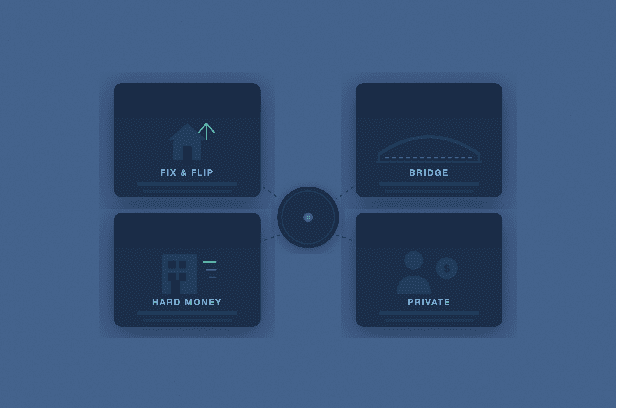
Bridge, hard money, fix-and-flip, and private loans often overlap and get confused. See what each term really means and how to pick the right loan for your deal.
Greenwich, CT Fix & Flip Loans Case Study: $475,000 Loan Delivers $495,000 Profit

A $475,000 fix and flip loan in Connecticut closed on a distressed Greenwich property with a 143% rehab-to-value ratio. $495,000 gross profit.
Fix and Flip Funding 2026: Loan Requirements by 6 Leading Lenders
Most investors start by comparing rates. But lender requirements matter just as much. Some lenders publish instant estimates or rate ranges upfront, while final pricing and approval still depend on factors like credit score, experience, liquidity, and deal strength. This guide breaks down what six leading lenders actually require before approving fix and flip funding. Every requirement is sourced directly from each lender’s own product page and published borrower resources. Disclaimer: All requirements listed in this post are sourced from each lender’s published materials as of the date of this writing. Requirements are subject to change. Verify directly with each lender before applying. What Fix and Flip Lenders Actually Evaluate Fix and flip lenders are not banks. They evaluate deals in a specific order: deal quality first, then execution experience, then liquidity, then credit. This post focuses on the borrower-side requirements: the six criteria that determine whether you qualify for fix and flip funding, independent of the deal itself. For the deal-side evaluation framework, see our fix and flip loan requirements checklist. Six criteria covered in this comparison: minimum FICO, experience requirement, minimum liquidity, entity structure, maximum leverage, and documentation required. For how lenders compare on closing speed, capital source, draw process, and geographic coverage, see our fix and flip lenders guide. Fix and Flip Loan Requirements Compared: 6 Leading Lenders New Silver: Fix and Flip Loan Requirements New Silver clearly outlines what borrowers need before applying, including credit expectations, closing documents, and funding requirements. Minimum FICO: 650 with 2+ completed projects. 700+ for investors with fewer than 2 completed projects. New Silver addresses this directly in its borrower resources: less-experienced investors face a higher credit threshold, though a co-borrower can be added to meet the requirements.* Experience: No hard minimum. FICO threshold rises for less experienced borrowers. Minimum liquidity: A liquidity statement is required showing sufficient funds to close and begin construction; a bank statement, retirement account, or similar documentation is accepted. A specific minimum amount is not published. Entity structure: LLC operating agreement required at closing. Business purpose loans only; non-owner occupied. Confirm your LLC is active and your operating agreement is current before applying. New Silver requires this document at closing, not after. Maximum leverage: Up to 90% LTC. Up to 100% of construction costs. Up to 75% ARV. Documentation required: Purchase and sale contract, construction budget, liquidity statement, proof of previous experience, if any, LLC operating agreement, and proof of insurance. New Silver’s borrower resources confirm no income verification is required: no W2, paystubs, or tax returns. *FICO thresholds for less experienced borrowers and co-borrower eligibility are addressed in New Silver’s published borrower resources. Verify directly with New Silver, as requirements may vary by deal. RCN Capital: Fix and Flip Loan Requirements RCN addresses borrower requirements directly in their published materials; their experience tier grid and documentation list are both publicly available before an investor submits anything. Minimum FICO: 650 for most borrowers. A 720+ FICO is required for certain high-leverage loan tiers, including Moderate Rehab loans with up to 100% purchase financing and 100% rehab financing. Experience: No minimum. RCN addresses its tier structure directly in its published materials. The four tiers based on flips completed in the last 3 years are 0 flips, 1-4 flips, 5-10 flips, and 10+ flips. Tier determines leverage band. Minimum liquidity: Bank statements required as proof of funds. A specific minimum amount is not published. Entity structure: RCN’s published frequently asked questions confirm that business entity documentation is required at underwriting. Specific entity type not published. Confirm your entity documents are current before submitting. Maximum leverage: Up to 95% of purchase price + 100% of rehab costs, not to exceed 75% ARV for experienced tier. New investors capped lower per the published tier grid. Documentation required: RCN addresses this directly in their frequently asked questions. They list application, authorization to run credit report and background check, bank statements, property appraisal, renovation estimates, business entity documentation, copies of leases if applicable. Stormfield Capital: Fix and Flip Loan Requirements Stormfield reviews each deal holistically as a balance sheet lender; their published qualification checklist covers both the borrower-side and deal-side preparation in detail. Minimum FICO: 640. Credit reviewed holistically. Borrowers below 640 are encouraged to reach out to discuss options directly. Experience: No minimum. Stormfield works with first-time investors. Strong credit and liquidity matter more than deal count at the first meeting. Minimum liquidity: Stormfield requires borrowers to show they can cover the down payment, reserves, and scheduled interest. No income threshold is published; the asset and the borrower are evaluated together.* Entity structure: LLC or Corporation required. No individual borrowing. Personal guarantees required in almost all cases. Confirm your entity is properly formed and your personal guarantee is in order before submitting. Stormfield requires both in almost every deal. Maximum leverage: Up to 92.5% LTC. Up to 75% LTV. Up to 90% LTPP. Lends based on the lower of LTC or LTV. Documentation required: Stormfield’s published qualification checklist covers this in detail: signed purchase agreement, itemized contractor estimates with 10% contingency buffer, comparable sales data supporting ARV, prior closing statements, and purchase contracts if experienced. Documents uploaded directly through Stormfield’s online portal. *Liquidity requirements and documentation details are covered in Stormfield’s published qualification checklist. Verify specific requirements directly with Stormfield. Kiavi: Fix and Flip Loan Requirements Kiavi evaluates both the borrower and the property when underwriting fix and flip loans. The lender is known for flexible experience requirements, high leverage options, and a process designed for repeat investors as well as first-time flippers. Minimum FICO: Kiavi has a minimum score. It’s published borrower guidance references “typically above 650” for fix and flip loans. Experience: No minimum. First-time flippers are explicitly eligible. Repeat borrowers access a reduced rate, reduced origination fee, and faster processing. Minimum liquidity: Cash required upfront to close, even at up to 95% LTC. Specific minimum is not published. Entity structure: Required in DC, FL, MN, NJ, OH, OK, TX, and VA. Individuals, LLCs, corporations, partnerships, and trusts
Fix and Flip Loan Rates in 2026: How 6 Leading Lenders Price Your Deal
Every lender shows a rate floor. Here is how six leading fix and flip lenders actually price a loan, and what moves your rate up from there.
How Experienced Investors Evaluate Fix and Flip Lenders
Experienced fix and flip investors evaluate lenders on more than rate. Here is the framework that separates a reliable lending partner from one that falls apart mid-deal.
Fast Fix and Flip Loans: Speed, Control, and the Human Edge

Get fast fix and flip loans with real-time updates, digital workflow optimization, and balance sheet reliability. Stormfield closes in 7 to 10 business days.
Fix and Flip Lenders: How to Choose the Right One
Finding the right fix and flip lenders is not straightforward. Dozens of lenders compete for the same deals, each with different capital structures, leverage limits, closing timelines, and geographic focus. The wrong choice does not just cost you a better rate; it can cost you the deal, the draw, or the project. Fix and flip projects are evaluated on the asset. This means the purchase price, the renovation plan, and the projected resale value after completion. These are different underwriting models, which is why a category of lender exists specifically for this market. According to ATTOM’s[1] 2025 year-end U.S. Home Flipping Report, investors completed 297,045 flips nationwide, the lowest volume since 2020. Gross returns fell to 25.5%, the lowest since 2008, and down from 32.1% the prior year. In a compressed margin environment, the lender you choose shapes your project outcome as much as the deal itself does. Most investors start their search by comparing interest rates. The rate is one number. It does not tell you how fast a lender closes, whether your loan gets sold after closing, how quickly draws get released, or what happens when something goes wrong mid-project. This guide compares leading fix and flip lenders across five parameters so you can find the right fit for your deal and your stage as an investor. What to Look for in Fix and Flip Lenders: 5 Key Parameters Not all fix and flip lenders operate the same way. The five parameters below determine whether a lender fits your deal, your market, and your experience level. 1. Closing Speed in Fix and Flip Loans Speed determines whether you win the deal. In competitive markets, a seller does not wait for a lender who needs three weeks to process a file. Before committing, ask whether the advertised timeline[2] applies to first-time or repeat borrowers, and whether it is measured in business days or calendar days. The fix and flip lenders below are listed by published closing timeline, starting with the fastest options: Easy Street Capital closes the EasyFix product in 24 to 48 hours, contingent on all parties being ready, including title and all underwriting documents. Customer reviews consistently confirm same-day and next-day funded closings. Kiavi advertises closings as fast as 5 days through dual-track underwriting, where valuation and credit review run simultaneously. They also publish 7-day and 10-day timelines depending on the product and borrower profile. Stormfield Capital typically closes in 7 to 10 days. Their published documentation explicitly states approval and funding in as few as 5 to 10 business days. RCN Capital advertises fast and reliable closings. Their published documentation references the ability to close in as few as 10 business days in some cases, but no standard numerical timeline appears consistently across their materials. Lima One Capital funds fix and flip loans within 3 weeks for repeat borrowers. No published timeline exists for first-time borrowers. New Silver doesn’t provide actual funding timelines in their borrower-facing documents. 2. Capital Source and Execution Certainty Offered by Fix and Flip Lenders The lender’s capital source decides if they sell your loan after closing and who manages your draws. It also decides whether they can change terms when the project or market conditions shift. A balance sheet lender funds loans from its own capital and holds them through payoff. Other models involve securitization, institutional REIT backing, or originate-to-sell arrangements. Ask every lender directly: “Do you hold this loan on your balance sheet or sell it after closing?” The lenders below are listed by how much each has publicly disclosed about their capital structure, starting with the most detailed disclosures: Stormfield Capital describes itself as a true balance sheet lender. All credit decisions and servicing remain in-house from application through payoff. Stormfield states explicitly: no loan sales, no handoffs. Kiavi operates a securitization-backed model[3]. Based on Kiavi’s published press releases, the company originates loans and sells them to institutional investors through rated securitizations. This means your loan will not remain with the originating team after closing. Lima One Capital is backed by MFA Financial, a publicly traded real estate investment trust. Lima One states this directly on their website as a capital stability advantage. New Silver operates an originate-to-sell model. In November 2024, New Silver announced a forward flow purchase agreement with Fortress Investment Group, under which Fortress acquires loans that New Silver originates. RCN Capital describes itself as a nationwide private direct lender. Capital source structure is not publicly disclosed in their borrower-facing documents. Industry sources suggest warehouse lending and securitization play a role in their pricing and operations, but RCN has not confirmed this on its website. Easy Street Capital describes itself as a direct private lender. Capital source structure is not publicly disclosed in their borrower-facing documents. 3. Leverage Offered by Fix and Flip Lenders: LTC and LTV Loan-to-cost (LTC) measures the loan amount against the total project cost: purchase price plus renovation budget. Loan-to-value (LTV) measures the loan amount against the current or projected property value. Most fix and flip lenders use both to size the loan, and the actual loan amount is determined by whichever cap is more restrictive. Higher leverage means less cash out of pocket. Maximum figures, however, apply only to the most experienced borrowers meeting specific FICO and experience requirements. New investors should expect lower leverage. Here are some details on the leading fix and flip lenders: Lender Max LTC Max LTV/ARV Rehab Coverage Notes Stormfield Capital 92.5% (up to 90% of purchase + 100% of renovation) 75% LTV 100% of approved costs through “draws.” Minimum FICO: 640, typical baseline Easy Street Capital 93% 75% ARV 100% of renovation Typical actual LTC from case studies: 90% Lima One Capital 95% 75% LTV 100% of rehab budget Minimum FICO: 660 FICO required Kiavi 100% of the purchase price 80% ARV Up to 100% of the rehab cost Experience-dependent RCN Capital 100% purchase + 100% rehab 75% ARV 100% of renovation Minimum FICO: 650 required New Silver 90% 75% ARV Up to 100%
Fix and Flip Lenders: Types, How They Work, and How to Choose One
Fix and flip lenders provide short-term, asset-based financing for property investors. Learn the different lender types, how they underwrite deals, and what to watch for before you choose one.
The Master Guide to House Flipping Calculators: Maximizing Profit in the 2026 Market
Mortgage rates have hit 6%[1], bringing retail buyers back, but for flippers, the math has changed. For fix-and-flip investors, hard-money loans typically carry interest rates of 8% to 13%[2] in 2025-2026, with occasional offers near 7.5%[3] on select lower-risk or commercial-oriented deals. Updated Financial Realities In 2021, many U.S. markets were so hot that well-priced homes could sell within days, often with multiple offers. By 2026, the market has rebalanced: buyers are more rate- and payment-sensitive and less likely to engage in bidding wars over an overpriced flip. As a result, homes can sit on the market for weeks or months rather than days, and every extra day of holding time eats into already-narrow profit margins because high-interest fix-and-flip financing continues to accrue. How to Move Forward Plug your next deal into our 2026 House Flipping Calculator to see the real numbers. If you’re ready to fund your next project, explore our Fix-and-Flip loan program to lock in competitive leverage and protect your margins. 1. Beyond the Purchase: Using a House Flipping Calculator to Find Hidden Leaks New flippers usually obsess over two things: the buy price and the build cost. While these are critical, they only tell half the story. In a high-interest market like 2026, a profitable flip depends on mastering four distinct financial pillars. Ignoring even one of these buckets is like trying to fill a bathtub with the drain open; your profit will leak out before you ever reach the closing table. A professional house flipping calculator must account for all of them. Let’s break down these four essential cost categories: Purchase Costs This is more than just the sticker price of the house. These are the expenses incurred to get the property: Renovation Costs (Hard and Soft) This is where you physically transform the property, but it’s not just about materials and labor. The Burn Rate – Holding Costs These are the ongoing expenses you pay from the day you buy the property until the day you sell it. These costs don’t add a cent of value to the home, but they eat your equity every day the house sits empty. Selling Costs These are the expenses incurred to sell the property. A real calculator provides more than fields for numbers; it gives you the truth about your profit. 2. The Rule of 70: A Classic Guide in the New Market You’ve probably heard of the 70% Rule as a starting point. It’s a simple formula: take the After-Repair Value (ARV), multiply it by 70%, subtract your repair costs, and that’s your Maximum Allowable Offer (MAO). MAO = (ARV x 0.70) – Repairs A few years ago, in a much faster-moving market, this 70% benchmark offered a relatively generous cushion. Today, it still serves as a useful starting point, but the 30% buffer has to carry more weight. With buyers more cautious and homes often taking longer to sell, higher interest and extended holding costs can quickly erode that margin. Why it’s broken today: This is where a home flip calculator helps you run actual scenarios. Stop relying on rules of thumb. For example, if you find a great property but have to buy it at 78% of its ARV to beat the competition, the home flip calculator will show you exactly how that impacts your bottom line. 3. Step-by-Step: Vetting Your Next Fix-and-Flip Deal To show you how this works, let’s walk through a real-world scenario. This is exactly how a professional flipper uses the Stormfield home flip calculator to vet a deal before they even make an offer. The Scenario Imagine a single-family home in a solid suburban neighborhood. Step 1: Running the Numbers Open the calculator. You aren’t just hunting for a rate; you’re hunting for leverage. Step 2: Understanding the Leverage Haircut The calculator builds a profile around you by looking at your experience, credit history, and where you’re buying. It’s designed to reward your track record; as your experience grows, it automatically unlocks better leverage and more favorable terms for your deal. Stormfield might offer up to 90% of your costs (LTC), but they usually cap the loan at 75% of the final value (LTV). If your rehab budget is too heavy, the 75% LTV cap acts as a ceiling, lowering your total loan. The calculator flags this immediately. You’ll know exactly how much cash you need to bring to the table. Step 3: Proof of Funds and Partner Reports Once you see the numbers, you can download a detailed PDF. Use this PDF as a pre-qualification letter to show wholesalers and partners you’re ready to close. 4. Stress-Testing Your Timeline: The High Cost of Every Extra Day This is the section where most flippers lose money without realizing it. A fix-and-flip is a race against time. Because with a bridge loan, you are paying for every sunrise you own the deed. The Math of a 60-Day Slip: Let’s use a $500,000 total project cost from the previous section. At 10% interest, you are losing $125 every single day. Even when the crew isn’t working, the meter is running. Project Duration Total Interest Paid Impact on Net Profit 6 Months (On Track) $22,500 Target Profit Maintained 8 Months (2 months delayed) $30,000 -$7,500 (Reduction in Profit) 10 Months (Stalled) $37,500 -$15,000 (Reduction in Profit) A house flipping calculator allows you to stress-test your timeline. If your contractor says the kitchen will take 4 weeks, a professional flipper models it at 8 weeks in their calculator. If the deal still makes money with a 2-month delay, it’s a safe bet. If a 2-month delay wipes out your profit, you should walk away. 2026 Fix and Flip: Frequently Asked Questions Sources
The 2026 Guide to a Profitable Fix and Flip in New Hampshire
New Hampshire is currently a tough market with high prices and very few homes for sale. Affluent buyers, often cash-heavy out-of-staters or equity-rich locals, drive competition. But affordability challenges exclude many median-income households. The inventory is limited in key corridors, and median home values sit well above the national average. For investors evaluating a fix-and-flip project in 2026, the local context matters more than national real estate headlines. In rapidly appreciating markets, rising prices can mask thin margins. New Hampshire does not typically offer that cushion. You have to get the numbers right from day one. New Hampshire rewards three things: disciplined buying, realistic renovations, and financing built to protect your margin. Deals work here because they are structured properly. If you are underwriting a project in Nashua, Manchester, the Seacoast, or Central New Hampshire, here is what you should realistically consider before you pull the trigger on the deal. Understanding the 2026 Fix-and-Flip Market Environment As per recent data, Median home values now hold steady between $492,000 and $535,0001, with inventory levels being low. Buyer demand remains strongest in Southern New Hampshire, especially in towns within commuting distance of Boston, as well as lifestyle markets like Portsmouth and Dover. This demand is driven by four specific shifts: New Hampshire is a high-equity market, meaning most sellers are not under financial pressure, and deeply discounted properties are uncommon. Investors rarely find large pools of discounted properties sitting on the market. Competitive deals often require speed, clean terms, and getting your numbers right. In this market, your profit is largely determined at acquisition, by buying at a price that leaves room for renovation costs, financing, and resale expenses. You protect that margin by executing the project on schedule. Top New Hampshire Fix and Flip Markets: 2026 Regional Analysis In New Hampshire, submarkets dictate your strategy. Southern towns such as Nashua, Derry, Salem, and Londonderry tend to show stronger resale liquidity due to their proximity to Massachusetts employment centers. However, that demand is reflected in higher and more competitive acquisition pricing. Manchester is a different beast. As the state’s largest city, it offers relative affordability compared to Southern commuter towns while still maintaining consistent resale demand. It is the go-to for investors who need liquidity and lower entry costs. Seacoast markets like Portsmouth and Dover trade at higher price points. Because leverage is capped as a percentage of value or cost, borrowers must bring more cash to closing, and even small pricing or timeline errors translate into larger dollar risk. In Central New Hampshire, including Concord and parts of the Lakes Region, pricing is moderate, but inventory moves more slowly compared to Southern commuter markets. Understanding the demand profile of your specific town is essential before estimating how long it will take to sell the property. The Reality of a New Hampshire Fix-and-Flip: Structural Vs Cosmetic One of the biggest ways to lose money in New Hampshire is assuming that projects will be light cosmetic renovations. Much of the housing stock is older2. As a result, projects frequently involve: These upgrades do not automatically “blow up” a deal, but they will if they are not identified and budgeted before closing. The difference between a profitable project and a compressed one in New Hampshire often comes down to scope accuracy. Smart borrowers build a detailed scope before closing. They include a 10-15% contingency for the unknown. In New Hampshire, assume structural scope until inspections prove otherwise, and price the deal with that reality in mind. The Septic & Shoreland Trap: Why “Grandfathered” is a Myth in 2026 In New Hampshire, a listing’s “3-bedroom” tag means nothing if the Individual Sewage Disposal System (ISDS) permit is only sized for two. Under current Env-Wq 1000 rules3, the legal bedroom count is tied to the system’s capacity; adding a third bedroom is treated as an expansion, not a cosmetic tweak. That triggers engineering, plan review, and permitting, plus potentially costly field work on rocky or clay-heavy soils. For waterfront flips within 250 feet of a Great Pond or fourth-order river, House Bill 1113 (2024)4 flipped the script: the buyer must now arrange a licensed septic evaluation before closing. If the system is in “failure”, surface discharge, or inadequate separation from the seasonal high-water table, the buyer is required to repair or replace it in compliance with state law and file a closure report. No “credit-only” workaround. If the NHDES OneStop database shows no permit, the property may not qualify as “grandfathered”. This means it is not recognized as a legally existing system under prior standards. The state will treat your flip like a new construction project. That means more time, more paperwork, and higher costs, and no free pass. Treat septic and shoreland compliance as part of your underwriting, not a post-closing surprise. Confirm legal bedroom count, permit status, and evaluation requirements before finalizing your acquisition price. Anatomy of a 2026 Fix and Flip: Typical Costs & ROI Component Typical Range Borrower Consideration Purchase Price $300K-$500K+ Higher in commuter/Seacoast markets Rehab Budget $50K-$120K+ Structural upgrades common ARV $400K-$650K+ Supported by renovated comps Timeline 4-8 months Winter may extend the resale Observed Gross ROI (Statewide) ~14-15% Based on recent ATTOM data, 5 reflects completed flips before financing Safety Margin (Pre-Finance) 20-25% Provides cushion for points, interest, resale costs, and timeline variability Managing Seasonality in New Hampshire Fix and Flip Projects Winter is not a minor inconvenience in this market. In winters, homes sit on the market longer, averaging 64 days, compared to just 30 in the summer. We see many fix-and-flip borrowers fail because they underestimate the ‘winter carry’ costs unique to the Granite State. Modeling a six-month hold without a winter buffer is a gamble with your equity. Carry Cost Sensitivity Example Scenario 6-Month Hold 9-Month Hold Interest Carry $24,000 $36,000 Taxes & Utilities $6,000 $9,000 Total Carry $30,000 $45,000 A three-month delay can reduce profit by $15,000 or more. In a 15 – 20% gross margin deal, that reduction is significant. This is why
The Algorithm vs. The Advisor: Why In-House Fix and Flip Loan Servicing Maximizes ROI

The Hidden ROI Killer in Fix & Flip Investing Move fast or lose the deal. In today’s market, that’s the only rule. Large national lenders promise speed by building sleek, tech-driven front-ends that promise “approvals in minutes.” For many fix and flip investors, these portals feel like the future until the jobsite gets messy. Real estate isn’t managed on a spreadsheet. The real rehab lives in missing lumber, slow city inspectors, and cracked foundations. When these real-world problems hit, the “Institutional Box” breaks. The national lenders are built for massive scale and high-volume processing. They are excellent at moving billions of dollars through digital portals. However, once the loan is closed, many national lenders prioritize third-party servicing efficiency. By using a third party, they inadvertently trade away the flexibility required to navigate a complex construction project. Here’s why in-house servicing of the fix and flip loan protects your profit when things go sideways. Why In-House Servicing Matters for Fix and Flip Loans Most investors focus 100% of their energy on closing the loan. They look at the rate, the points, and the LTV. However, the most expensive part of a loan isn’t the interest rate; it’s the cost of a stalled project. The Institutional Hand-off Many large lenders often operate as “Origination Machines.” They fund your loan, take their fee, and then immediately sell the Servicing Rights to a third-party institutional servicer. The Result: You borrowed from a “tech-forward” lender, but you are making payments and requesting draws from a servicer that has not underwritten your project. The servicer brings efficiency and works well until you hit a snag. Once you hit a snag, the call center is insufficient due to the following reasons: For them, you are just another file in the system. In-house servicing of the loan ensures that the draw management is frictionless. How Draw Delays Kill Fix and Flip ROI Investors often shop for the lowest rate. They think a 0.5% cut is a major win. It is a distraction. In a flip, the interest rate is a minor cost. The clock is the real killer. Let’s look at a typical $100,000 loan on a 12-month project. Scenario A: Scenario B: The difference by saving 0.5% in interest rate is $42 a month. That’s a good dinner. But interest isn’t the only leak. You have taxes, insurance, and utilities. Every day your project stalls, your profit bleeds. The Snag: Snags happen. They range from nuisances to disasters. Consider these: You are halfway through a duplex conversion in a town you’ve worked in for years. You followed the approved plans, but a new inspector walks the site and decides the fire-rated drywall needs to be upgraded across the entire first floor. Or imagine you’ve finished the rough-in plumbing and electrical work. You are ready for your $25,000 draw so you can pay your subs and buy the drywall. The lender sends a third-party inspector who is paid a flat fee to check boxes. He sees the plumbing is done, but he also sees a pile of old lumber in the backyard and three light switches that haven’t been capped yet. In both cases, you don’t need a box-checker. You need a partner who can pivot. A 0.5% lower rate is a “paper win” that disappears the moment you experience a 7-day draw delay. The Fix and Flip Project ROI Comparison Cost Category The “Cheap” Loan The “Strategic” in-house serviced Loan Monthly Interest $833 $875 Extra Month of Holding Costs $2,500 (Tax, Ins, Utils, Interest) $0 Contractor Re-Mobilization Fee $1,000 (Crew left for another job) $0 Total Cost of One Month Delay $3,500 $0 The Verdict: By “saving” $42 a month on interest with the Algorithm, you risked a $3,500 loss when the project hit a snag. The Advisor model saved you $3,000+ in pure profit by simply keeping the project moving. Fix and Flip Draw Management: Human Wisdom vs. Automated Systems Every veteran flipper knows the “Permit Panic.” You’re ready to swing hammers, but the local building department has a 3-week backlog. How a National Lender Responds (The Automated Default) In a securitized loan pool (the kind used by national giants), compliance is managed by algorithms. If your “Rehab Completion Date” passes and you haven’t hit your milestones, the system triggers a series of automated events: How a Balance Sheet Lender with In-house Servicing Responds (The Advisory Model) When a loan is serviced in-house, the bridge between “Problem” and “Solution” is a single hallway (or a single Slack message). Fix and Flip Draws: Why Tech for Tech’s Sake Fails Many national lenders brag about their “Draw Portals.” But a portal is just a mailbox. The real bottleneck is the Inspection and Approval Loop. Case Study: How In-House Servicing Saved a Brooklyn Fix and Flip Project The Situation A real estate investor in Brooklyn, New York, was halfway through the construction of a four-unit multifamily building. The project was originally financed through a national bank that used a third-party loan servicer. While the loan itself was in place, the borrower waited weeks for money while his crew sat idle. Funding delays began to interfere with the construction schedule and made it harder for the borrower to keep the project moving efficiently. After spending nearly a year working through these issues, the borrower decided to refinance and look for a lender that could better support an active construction project. The Stormfield Capital Solution Stormfield refinanced the existing loan and provided an additional $650,000 renovation holdback to fund the remainder of the project. Since the loan was serviced internally, the draw process was straightforward and communication was direct. Inspections were scheduled quickly, and funds were released without the delays the borrower had previously experienced. With a more responsive servicing process in place, the investor was able to complete construction in under six months and move the property toward stabilization much sooner than expected. Stormfield Capital: One Fix and Flip Partner from Close to Exit Most national lenders vanish once
Fix and Flip Loans Massachusetts: Instant Pre Qualification

In the 2026 Massachusetts real estate market, cash is your enemy. If you are using leverage, you are not just competing on price; you are competing on speed. ATTOM reports that over 60% of flipped homes were bought with cash. The cash trend makes it harder for leveraged investors like you, who are using fix and flip financing to compete, unless you can show you have the cash to close. Sellers want certainty. A pre-qualification letter does exactly that. It serves as proof of funds (POF). It gives sellers confidence that your financed offer can close as quickly and reliably as cash. Stormfield Capital has developed a Pre-Qualification tool that turns your project numbers into a pre-qualification letter. Why Massachusetts Investors Need a Fix and Flip Pre-Qualification Tool Imagine you have identified a property to flip in Worcester just before a long weekend. You need a pre-qualification letter to compete with cash buyers. With the Worcester metro area among the top three hottest housing markets in the United States, waiting for a loan officer to be available after a long weekend is a dead end. In a market where cash buyers move instantly, proving your own financial muscle 24/7 is the only way to stay in the game. For investors using a fix and flip loan, a self-service Pre-Qualification tool acts as a “POF Plus.” The tool lets you play out scenarios and generate a pre-qualification letter based on the numbers of your specific deal: Purchase Price, Rehab Budget, and ARV. Your letter proves to a seller that you are not just “looking” for a loan, but have an immediate, green light to move. Want to know more about the market outlook and investment strategies in MA for 2026? Refer to the blog: Fix & Flip Loans in MA: 2026 Market Outlook & Investment Strategies Build Your MA Fix and Flip Pre-Qualification Letter in Under 5 Minutes Tap through a few screens of Stormfield Capital’s pre-qualification tool. Answer the simple questions, and get to the “Estimate Your Rates and Options” screen. Input your purchase price, your estimated rehab cost (use real Massachusetts costs), and the ARV. The tool generates the fix-and-flip loan range for which you qualify. You key in the loan amount. Instant Result: The tool generates your Estimated Rate, Points, and Loan Details. Download your Pre-Qual Letter and Loan details. A letter that proves to any listing agent or seller that you mean business. MA Rehab Loan Estimator Accuracy: Costs That Impact Your Flip Profit The fix and flip tool handles the loan logic, but the tool is only as sharp as your numbers. In Massachusetts, the 2026 labor and materials costs remain high. A shortage of skilled trades in the Northeast means your budget can vanish if you guess wrong. The Profit Killers: Don’t use a flat square-foot calculation. A 200-sq.-ft. kitchen renovation carries significantly higher costs per foot than a 200-sq.-ft. bedroom. Similarly, in the Boston and Worcester corridors, the jump from “Rental Grade” to “Luxury Condo” finishes can wreck your budget by $50,000+. Real Massachusetts Benchmarks: 92.5% LTC: Keep Your Cash for the Next Deal In a market like Massachusetts, your biggest hurdle isn’t just finding the deal, it’s staying liquid enough to grab the next one while your current project is mid-rehab. A Simplified Fix and Flip Loan Example: On a typical $700,000 project, the difference is $87,500 back in your pocket. That isn’t just “liquidity”. That is the deposit on your next triple-decker in Worcester or a security blanket for when a “refresh” turns into a full plumbing gut. By generating the pre-qualification letter, you show a seller you have a 92.5% partner behind you. You are showing them you have the financial backing to close with certainty. Know Your Costs Before You Sign Don’t get blindsided at the closing table. Two important questions that you should ask your fix and flip hard money lender: Q1. How Much Cash Do You Need to Close on a Fix and Flip Loan in MA?This isn’t just your down payment. It is your down payment plus origination points, legal fees, and prepaid interest. Q2. What Is the Monthly Carrying Cost of a Massachusetts Hard Money Loan?A hard money loan is interest-only. As you draw rehab funds, your loan balance and your payment will grow. Stormfield Capital’s pre-qualification tool not only generates the proof of funds, but also the loan details. You get the answers you need before you even talk to a lender. Top Fix and Flip Financing Mistakes Massachusetts Investors Must Avoid 1. Ignoring Holding Costs: Interest payments aren’t your only expense. You should factor in property taxes, insurance, and utilities for the full duration of the project. 2. Overestimating the Exit: If you plan to refinance into a long-term rental (BRRRR), evaluate your DSCR (Debt Service Coverage Ratio). If the property doesn’t generate enough cash flow at today’s rates, your exit plan may be at risk. 3. The Appraisal Gap: Most investors assume the appraiser will see the “potential.” In reality, appraisers rely on the most recently sold comps. If there are no $600k sales in the last 6 months, don’t count on a $600k ARV. After the Pre-Qual Letter: Funding Speed, Draws, and Execution Timeline A pre-qual letter gets you to the closing table, but the speed of your construction draws determines if you actually hit your profit goals. There is nothing worse than having a kitchen ready for cabinets but being stuck waiting 10 days for a third-party inspector to clear your funds. Stormfield has its loan servicing in-house. That means you aren’t dealing with a fragmented “mom-and-pop” setup or a slow institutional middleman. Once you close on your Massachusetts property, your draws are processed with the same urgency as your initial loan. You can keep your momentum, pay your subs on time, and get the property back on the market faster. Conclusion: Win Massachusetts Fix and Flip Deals With a Pre-Qualification Letter In the Massachusetts market, the best deals don’t
