

Real estate is about timing. You find a great deal, but it needs to close fast. The bank takes 45 days. You cannot wait. You need cash now to lock up the deal.
That’s where bridge loans for residential real estate investors comes in.
This guide isn’t for a homeowner trying to buy a new house. This is for you, the developer, the flipper, the investor who needs to move fast. We’re cutting through the noise to show you exactly how this tool works for your business.
What a Residential Bridge Loan Is
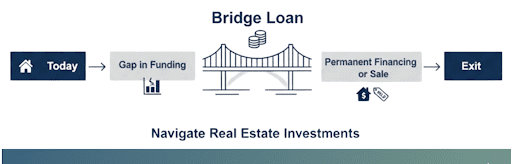
A Residential Bridge Loan is a short-term, secured loan used to “bridge” a gap in funding. Think of it as a temporary capital injection that holds a property until you secure permanent financing or sell the asset.
In the investor world, a bridge loan is a type of private money loan.
What Makes It Different?
- Speed: Banks are slow. Private lenders like Stormfield can close a deal in 7–10 days. Speed is your edge in this market.
- Collateral-Based: Banks look mostly at your personal income and credit score. Private lenders look primarily at the asset. If the deal is strong, the funding is possible.
- Interest-Only Payments: Most bridge loans are interest-only. This keeps your monthly costs low while you execute your business plan. You pay the principal in one lump sum when the loan term ends (the exit).
A bridge loan is fast, flexible capital for investment properties that banks cannot fund quickly.
How Bridge Loans Work in Real Estate Transactions
A bridge loan is used for transitional properties, assets that are not yet stable or cash-flowing.
It follows a simple three-step cycle:
- The Acquisition: You find a property (a distressed flip, a condo inventory bulk sale, or an apartment building that needs heavy rehab) that needs quick funding. The bank needs 60 days for approval; the seller wants to close in 10 days. You get a bridge loan from a private lender to acquire the property fast.
- The Bridge Period: This is the loan term, usually 12 to 18 months. You make interest-only payments while you renovate the property, lease up the units, or complete a stabilization plan. The bridge loan holds your place.
- The Exit: When your term is up, you pay off the bridge loan. This is your planned exit strategy. The two main exit strategies are selling the property or refinancing with a long-term, low-rate bank loan.
The bridge loan gives you time to fix, stabilize, or reposition a property before your long-term exit.
When Investors Should Use a Bridge Loan
Residential bridge loans are not for every deal. They are best for specific situations where time is money and a conventional lender can’t help.
| Scenario | What It Solves |
|---|---|
| Refinancing Maturing Debt | You have an existing loan (like a construction or fix-and-flip loan) that is about to expire, but your project isn't 100% complete, or the permanent lender is delayed. A bridge loan pays off the old debt, preventing a costly default, and gives you 12 more months to finalize your exit. |
| The "Cash-Out" Pull | You have a free-and-clear property or significant equity in a rental portfolio. You need quick cash to put a deposit down on your next development deal or inject capital into an existing project. A bridge loan lets you cash out equity fast without waiting for a bank refinance. |
| Winning a Competitive Bid | You want to make a "cash offer" to beat out other buyers. A bridge loan can fund your purchase fast enough to compete with cash buyers, giving you the best chance to win the deal. |
Residential Bridge Loans vs. Other Loans (Know the Difference)
Your success depends on picking the right loan product for your situation. Don’t use a bridge loan when you need a construction loan; you’ll pay too much.
Lenders like Stormfield offer different products that are suitable for different situations.
| Loan Type | Primary Use | Investor Takeaway |
|---|---|---|
| Residential Bridge Loan | To Hold or Stabilize. Buying an asset quickly before you are ready for a long-term exit. | Use this when you need speed and short-term flexibility on a non-rehab project, or to pay off maturing debt. |
| Fix and Flip Loan | To Renovate. Buying and funding the entire rehab budget for a property you plan to sell quickly. | Use this when the asset needs heavy work. The loan funds both the purchase and the renovation costs. |
| New Construction Loan | To Build Ground-Up. Financing the entire process of building a new structure (SFR, townhomes, etc.) from the ground up. | Use this for ground-up development. It’s a different loan structure tied to project milestones. |

Stormfield Capital provides flexible capital for every stage of your residential project.
How Much You Can Borrow and Key Eligibility Factors
When a private lender like Stormfield looks at your deal, they focus on two things: the asset and your ability to execute the exit plan.
Loan-to-Value (LTV)
This is the biggest number to watch. It is the loan amount divided by the property’s value.
- Max LTV for Stormfield Residential Bridge Loans is typically up to 70%.
If a property is worth $1,000,000, you can usually borrow up to $700,000. The remaining $300,000 is your required equity (your skin in the game).
| Stormfield Capital Bridge Loan Terms | Details |
|---|---|
| Loan Amounts | Typically $150,000 – $5M+ |
| Maximum LTV | Up to 70% of the property's value. |
| Term | 12–18 months (short-term financing). |
| Lien Position | 1st Lien Only (Stormfield must be the primary lender). |
| Closing Time | Routinely 7–10 days (fast closing). |
Most investors can borrow up to 70% of the property’s value on a Residential Bridge Loan.
Eligibility: What The Lender Really Cares About
- The Borrower: Loans are made to an Entity (LLC or Corporation), not an individual. No owner-occupied residences.
- Experience: It is a plus. Especially for larger or riskier projects, and if you want stronger terms.
- Liquidity: You must show you have the cash reserves to make the interest payments during the loan term and cover any unexpected costs.
- The Exit Plan: The lender needs a clear, realistic path for you to pay them back in 12–18 months (e.g., “I will sell it,” or “I have a bank lined up for a long-term refinance”).
Costs, Interest Rates, and Fee Structure
Bridge loans are expensive compared to a 30-year mortgage, but you pay for speed and flexibility. Since the loan term is short, the total dollar cost is often manageable.
You will typically see three main costs:
1. Interest Rate
Bridge loan rates are interest-only. This means your monthly payment covers only the interest, not the principal.
- Range: Expect rates to be higher than bank loans, typically falling in the 8% to 12% range, depending on the deal’s strength and the LTV.
- Payment: You often pay interest monthly, though some lenders offer interest reserves (pre-paid interest) that are held back and paid out monthly, reducing your immediate cash burden.
2. Origination Fees (Points)
This is an upfront fee charged by the lender for arranging the loan. It is paid at closing. One point equals 1% of the total loan amount.
- Range: Expect to pay 1 to 3 points (1% to 3%) on the loan amount.
- Example: On a $500,000 loan, 2 points equals $10,000 paid at closing.
3. Closing Costs
These are standard third-party costs you pay for any real estate transaction.
- Examples: Appraisal fees (private lenders use fast, specialized appraisers), title and escrow fees, legal review, and filing fees. These typically run into the thousands and are non-negotiable.
Investor Takeaway: Don’t focus only on the interest rate. Focus on the speed of closing. If paying 2 extra points saves you a 45-day closing delay and prevents you from losing a profitable deal, the fee may be worth it.
Approval Process and Typical Timelines
Private lending is designed for speed. When dealing with a bridge loan, the process is streamlined to get you funded faster than the competition.
The Private Lender Process
- Application & Initial Quote (1 Day): You submit a simple application and details on the property. Stormfield reviews the property, your exit plan, and your experience. You get a quick term sheet/quote. Stormfield Capital’s pre-qualification platform allows you to get started from the convenience of your phone.
- Due Diligence (3–5 Days): Once you accept the terms, the lender orders the appraisal and the title work. The property is the key asset, so this due diligence is fast and focused. The private lender checks that the value is there and the title is clean.
- Underwriting & Docs (2 Days): The lender’s underwriter packages the file. Since the process is asset-based (not DTI/personal income), it moves fast. The legal team prepares the loan documents.
- Closing (Day 7–10): You sign the documents with the title company, and the funds are wired.
The Speed Signal: The key difference from a bank is that the decision depends primarily on the asset’s value and marketability, not a long review of your W-2s and personal debt ratios. This focus on the collateral is why a private lender can close in 7–10 days.
Pros and Cons of Using a Bridge Loan
Like any financial tool, bridge loans have trade-offs. You need to know when the benefits outweigh the costs.
See which loan actually fits your flip.
Flipping succeeds when money flows at the same pace as the work. A structured fix & flip loan keeps your project moving, while generic hard money often slows it down.
| Pros (Why You Use One) | Cons (The Trade-Offs) |
|---|---|
| Speed and Certainty | Higher Interest Rates |
| Close deals in 7–10 days. Beat out slower bank buyers. | Rates are typically 3–5 percentage points higher than long-term bank financing. |
| Flexibility | Upfront Fees (Points) |
| Loans are asset-based and work for complex/transitional properties that banks won't touch. | You pay 1% to 3% of the loan amount just to originate the loan, regardless of the term. |
| Low Monthly Cost | Risk on the Exit |
| Interest-only payments keep your operating costs low during the short loan term. | If your planned exit (sale or refinance) fails or is delayed, you face costly extension fees or default. The exit must be solid. |
Smart Exit Strategies for 2026
The bridge loan is worthless without a strong Exit Strategy. This is your plan for paying off the loan principal when the term is up. A lender will always scrutinize your exit plan before funding.
1. The Sale (Flip)
- Plan: You used the bridge loan to acquire a distressed property quickly. You fix it fast and sell it on the open market for a profit.
- Key: The sale proceeds pay off the loan balance, interest, and fees.
- 2026 Focus: Be conservative on your ARV (After Repair Value). An aggressive exit value puts you and your lender at risk. The market needs to support the sale.
2. The Refinance (BRRRR Strategy)
- Plan: You used the bridge loan to acquire, stabilize, and lease up a multi-unit property. Once it’s fully occupied and cash-flowing, you secure a long-term commercial loan (like a bank or credit union loan) with a lower interest rate.
- Key: The new long-term loan pays off the entire bridge loan principal.
- 2026 Focus: Have a relationship with a local commercial bank before you take the bridge loan. You need assurance that a long-term lender will refinance the asset once stabilized.
3. Payoff Maturing Debt
- Plan: An existing construction loan is ending, and the final certificate of occupancy is delayed by 3 months. You bridge the gap with a short-term bridge loan.
- Key: The bridge loan gives you time to finish the punch list and secure the final long-term financing or sell the completed asset.
Real-World Examples for Investors
Let’s look at how successful developers use bridge loans to gain an advantage.
Example 1: Beating the Competition on a Distress Sale
- The Problem: A developer finds a vacant four-unit building sold at auction. The closing must happen in 14 days, non-negotiable.
- The Bridge Solution: The developer uses a Stormfield Residential Bridge Loan for the acquisition. They close in 9 days, beating out competitors who relied on slow bank pre-approvals.
- The Exit: Over 12 months, the developer completes minor cosmetic renovations, leases up the vacant units, and then refinances the stabilized asset with a local credit union. The new loan pays off the bridge loan.
Example 2: Releasing Equity for a New Deal
- The Problem: A developer owns a fully paid-off rental property but needs $300,000 for a down payment on a new piece of land for townhome development. Waiting 60 days for a bank cash-out refi means losing the land deal.
- The Bridge Solution: The developer gets a bridge loan against the rental property (a cash-out loan). They close the loan in 10 days, securing the $300,000 for the land deposit and locking up the deal.
- The Exit: The funds from the sale of the finished townhome project 18 months later are used to pay off the $300,000 bridge loan.
How to Select the Right Bridge Lender
When you shop for a bridge loan, don’t just look at the rate. You are vetting a partner who needs to be reliable and fast.
Ask these 4 questions:
- “How fast do you actually close?” A bank says 30 days. A real private lender says 7–10 days. Check their track record.
- “Do you lend to my entity (LLC) or do I have to guarantee it personally?” Most private loans require a personal guarantee, but the decision process is still focused on the asset. Make sure they understand investor entity lending.
- “What happens if my exit is delayed?” Ask about extension fees and policies upfront. A good lender is clear about penalties.
- “Do you use in-house money or broker it out?” A lender who uses their own capital (like Stormfield) has more control over the process, leading to faster, more reliable closings. Brokers rely on third parties, which can slow things down.

You are not just choosing a loan.
You are choosing a partner who needs to move at your speed.
Closing Takeaway for 2026
The residential real estate market moves fast, and cash buyers win. As a developer or flipper, you need capital that moves at your speed.
A Residential Bridge Loan is the tool that lets you:
- Lock up deals that others miss.
- Bridge the gap while you stabilize or reposition an asset.
- Execute your plan on a fast timeline.
Don’t wait 45 days for a bank. If you have a solid deal and a clear exit strategy, a private bridge loan is the fastest path to funding and profit.
Table of Contents
Stormfield Capital is a direct balance-sheet lender offering financing solutions for residential investment projects, including fix and flip, bridge, and new construction loans. With fast decisions, consistent draw processes, and reliable funding, Stormfield supports investors across the Northeast and other key U.S. markets.
If you’re evaluating financing for an upcoming flip, Stormfield’s team can help you compare your options and understand the best structure for your project. Contact us to discuss your deal or get a quick quote.
Residential Bridge Loan FAQs
1How long do I have to pay back a bridge loan?
Bridge loans are short-term. The term is typically 12 to 18 months. In rare cases, they can go up to 24 months. You must have a clear plan to pay it off completely by the end of the term.
2Can I use a bridge loan for my primary residence?
No. Private lenders like Stormfield Capital lend to investment entities only (LLCs, Corps). These loans are designed for business purposes (flipping, developing, renting) and cannot be used for owner-occupied homes.
3Do I need good credit for a bridge loan?
Good credit helps, but private lenders are primarily focused on the asset and the exit plan. If the deal makes sense and the collateral is strong, they are much more flexible than a bank on borrower credit history. Your liquidity (cash reserves) is often more important than your credit score.


